After the Credits: Trans Houston Talks Power
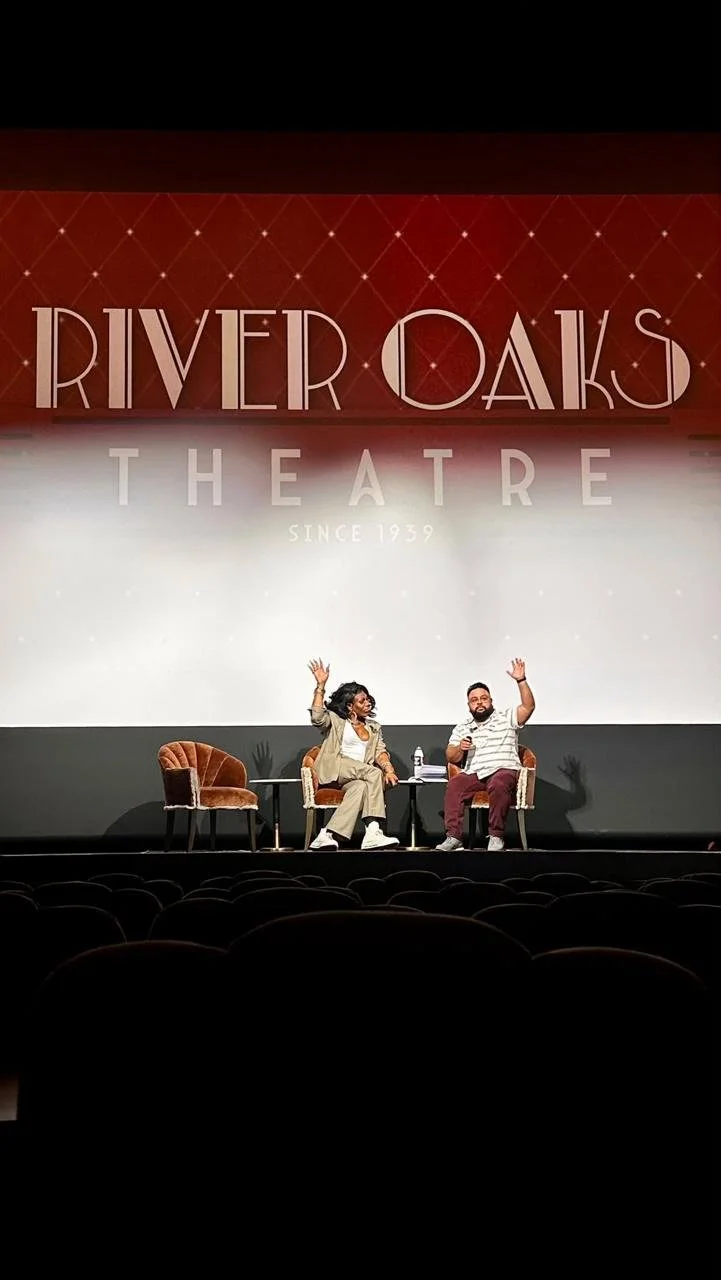
Photo by Bibi Xia (She/Her)
The story on screen was about making history. The conversation afterward was about making sure history doesn't stop with one person.
A screening of State of Firsts brought Houston's transgender community together at the River Oaks Theatre on Monday, July 6.
But by the time the lights came up, the discussion had moved beyond the first openly transgender member of Congress and toward a harder question: How do you build political power for the people who aren't in the room yet?
Halfway through the panel discussion, Joelle Bayaa-Uzuri Espeut reframed the conversation. The panelists had been talking about candidate trainings, a natural next step after a film about a historic victory. Joelle wasn't convinced that was where the work began.
"This is even before the candidate training," she said. "I'm talking about the Black trans woman who is not even in this space, not even connected to politics, not even connected to advocacy. How are we creating hope for them?"
That question became the heart of the evening.
The audience had just spent 93 minutes with State of Firsts, Chase Joynt's documentary following Rep. Sarah McBride through her 2024 campaign and her first months as the first openly transgender member of Congress. The film captures both the triumph of her election and the hostility that came next: winning on the same night Donald Trump returned to the White House, being banned from Capitol restrooms before she was sworn in, and deciding when to answer an attack and when to keep moving. By the time the credits rolled, few eyes were dry.
Organizations from across Houston filled the lobby before the screening, including Trans Voices Houston, Trans & Gender Queer Houston, the Triple A Alliance, the Texas Trans Voter Initiative, Equality Texas, Boi's Club HTX, The Montrose Center, Trans Men Empowerment, Transwoman Liberation, Grace Place, and First Christian Church of Katy.
The post-screening panel featured Dylan Forbis, the first openly transgender person elected to the Texas Democratic Party Executive Committee, who tabled that night for the Texas Trans Voter Initiative, and Joelle Espeut, Vice President of the Houston LGBTQ+ Political Caucus and Advocacy Director at The Normal Anomaly Initiative.
Together they turned the conversation toward the next generation of trans leaders in Houston.
It Starts With Possibility
One of the documentary's central themes is the weight of being "the first." Both panelists agreed that representation matters, and that visibility alone cannot build political leadership.
"It really starts with possibility and visibility," Joelle said. "For me as a Black trans woman, you do not see any possibility. You don't even think of politics as something that you need to be engaged with."
Her own path into advocacy began almost accidentally. Five years ago, then-caucus president Jovon Tyler kept inviting her to a volunteer mixer until she finally said yes. One thing stood out when she walked in.
"There is no one in this space that looks like or loves like me."
Her own possibility models weren't the most famous names.
"When I think about possibility models, I think about Andrea Jenkins. I think about Precious Brady-Davis, who was in the documentary with Sarah, who was the first Black trans woman elected [in Cook County]. Meeting her created possibility."
For Dylan, possibility began with a challenge issued years earlier by Judge Phyllis Frye, the nation's first openly transgender judge, at the Houston Transgender Unity Banquet.
"When you run for office, sometimes it's not about winning," he recalled her saying. "But when you run, you get this microphone in your face and you get to talk about the issues that are important to you."
Two Very Different Jobs
If the documentary asked what it takes to get elected, an audience member asked what changes once someone wins, pointing to McBride's distinction between advocacy and elected office.
"They absolutely are two different jobs," Joelle said. "As an advocate, I represent the communities that are at the margins. Once you become an elected official, that shifts instantly. Yes, I still represent Black trans women, but I am no longer a call away for them." The tension is one she still wrestles with. "My North Star is always the community and populations that I serve. If me having the greatest impact for them is me being a community advocate, then maybe that's my lane."
Dylan described political change as an ecosystem, where mutual aid, protest, advocacy, and elected office all play necessary roles.
"We didn't choose this war, but we're at war and we need everything. I don't think that there's a golden child. But everybody should have an opportunity to test the waters."
He was blunt: "Harris County is one of the largest counties in the country, and we don't have [trans] elected officials. We're bigger than a lot of the other blue hubs that have a lot of representation." What he hopes to see is a homegrown movement: "Maybe by 2028, we've got a handful of people running for office, and it will be real grassroots. No astroturfing, no helicopter organizing, no one coming in from out of state to tell us what to do. This is our home."
"We Gotta Pull Them"
The evening's most revealing moment came from two organizers approaching the same problem from different directions.
Dylan focused on building political infrastructure. "We put resources together, we start holding trainings for candidates. Call it a hell-raiser camp, whatever we want, but we start doing it."
Joelle challenged the premise. "I'm a Black trans woman. Baby, I've been doing it. This is even before the candidate training. I'm talking about the Black trans woman who is not even in this space. There are Black trans women making ten thousand dollars or less a year."
Her answer wasn't another program, but a personal invitation: "Take a Black and brown trans person and take them to a political meeting, or to one of those monthly civic group meetings."
Dylan didn't reject the idea, but expanded it. "People aren't going to come. We gotta pull them."
Both agreed: candidate trainings matter, but only if people can first imagine themselves belonging. Before anyone runs for office, someone has to invite them into the room.
Building Possibility
Asked what people could do immediately, Joelle stayed grounded in relationships.
"Take someone along with you. If you are working with a civic group or an organization that does civic engagement, bring someone that is Black and brown and trans or gender expansive." Gesturing toward the voter registration cards outside, she added: "If you are already registered to vote, I challenge you to give that to one or two people. Voting this November isn't going to save our lives overnight. This is harm reduction."
State of Firsts celebrates a historic breakthrough. The conversation that followed asked how to ensure that breakthrough does not happen for only one person. For Joelle and Dylan, the answer was the slower work of invitation, mentorship, and community. Long before someone decides to run, someone has to help them believe they belong.
Trans Voices Houston is a 501(c)(3) nonprofit amplifying trans stories across the greater Houston area. The panel discussion was recorded for the Trans Voices Podcast and will be available soon wherever you listen.
Quotes have been lightly edited for length and clarity.